
The Benefits of Whole-House Water Filtration Systems in Vancouver, WA
Clean, reliable water is essential for everyday life. Whether you’re drinking a glass of water, cooking dinner, taking a shower, washing clothes, or running your dishwasher, your household depends on the quality of the water flowing through its plumbing system. While municipal water supplies are treated and monitored to meet drinking water standards, some homeowners still experience concerns involving chlorine taste, sediment, mineral buildup, or the quality of water supplied by private wells.
For homeowners in Vancouver, Washington, installing a whole-house water filtration system can provide a convenient way to address specific water quality concerns throughout the home. Unlike traditional faucet filters or refrigerator filtration systems, whole-home water treatment solutions are installed where water enters the property, allowing treatment to occur before water reaches individual fixtures and appliances.
At Service Pro Plumbing, we provide professional whole-house water filtration installation, water treatment solutions, and water quality services in Vancouver, WA. Our experienced plumbers help homeowners understand their water quality concerns, explore filtration technologies, and select systems designed for their household’s needs.
Whether you’re interested in improving the taste of your tap water, reducing sediment, managing mineral buildup, or upgrading your home’s plumbing system, understanding the benefits of whole-home water filtration in Vancouver, Washington, can help you make an informed investment.
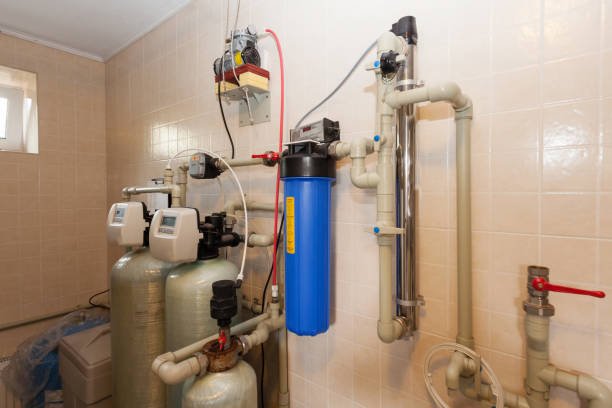
What Is a Whole-House Water Filtration System?
A whole-house water filtration system, also called a whole-home or point-of-entry water treatment system, is designed to treat water as it enters your home.
Instead of installing individual filters on separate faucets, a whole-house system connects to the main water supply line and treats water before distributing it throughout the plumbing network.
Depending on the equipment selected, filtration may help address:
- Chlorine taste and odors
- Sediment, sand, and suspended particles
- Certain organic compounds and chemicals
- Specific dissolved contaminants
- Water quality concerns associated with private wells
Some homeowners also combine filtration with water softening, conditioning, or ultraviolet treatment to address additional concerns.
However, no single filtration technology removes every possible contaminant. The most effective approach begins with understanding your water source and identifying the substances you want to reduce.
For homeowners searching for water filtration systems in Vancouver, WA, professional guidance can help determine which technology is appropriate.
1. Improve the Taste and Smell of Your Household Water
One of the most noticeable benefits of a whole-house water filtration system is the potential to improve the taste and odor of tap water.
Some municipal water supplies contain residual chlorine, which helps control microorganisms as water travels through the distribution system. Although this treatment plays an important role in maintaining drinking water quality, chlorine may affect how water tastes or smells.
Certain whole-house carbon filtration systems are designed to reduce chlorine taste and odor.
Better-Tasting Water From Your Faucets
When the appropriate filtration system is installed, homeowners may notice improvements in water used for:
- Drinking
- Cooking
- Making coffee or tea
- Preparing meals
- Filling reusable water bottles
- Producing ice
Whole-home filtration can also improve the experience of using water throughout other parts of the house, depending on the issue being treated.
At Service Pro Plumbing, we help Vancouver homeowners evaluate water filtration options based on their specific concerns rather than recommending the same system for every property.
2. Filter Water Throughout Your Entire Home
A major advantage of whole-house filtration is that it treats water at the point where it enters the residence.
Traditional point-of-use filters typically treat water from a specific faucet, refrigerator, or drinking water dispenser.
A whole-home system provides a more centralized solution.
Whole-House Filtration vs. Under-Sink Water Filters
An under-sink filtration system can be an excellent choice when the primary concern is drinking or cooking water.
However, it generally does not treat water delivered to showers, bathroom sinks, washing machines, or other fixtures.
A whole-house filtration system can provide treatment throughout the home’s plumbing network.
For example, a homeowner who wants to address sediment entering several fixtures may benefit from a point-of-entry sediment filtration system rather than installing multiple individual filters.
Likewise, certain water quality issues may be better addressed through a combination of whole-home and dedicated drinking water treatment.
For homeowners comparing whole-house vs. under-sink water filtration in Vancouver, WA, the right decision depends on the water quality problem, household preferences, and budget.
3. Help Protect Plumbing Fixtures From Sediment Buildup
Sediment is another common reason homeowners consider installing water filtration equipment.
Depending on the water source and plumbing conditions, suspended particles such as sand, silt, rust, and other debris can enter the household water supply.
Over time, these particles may accumulate in faucet aerators, showerheads, appliance screens, and other plumbing components.
A properly selected sediment filtration system can capture particles within its rated filtration range before they travel farther into the home’s plumbing system.
Reducing Sediment-Related Plumbing Problems
Removing sediment may help homeowners experience fewer issues involving:
- Clogged faucet aerators
- Sediment accumulation in fixtures
- Reduced flow through small screens
- Particles entering certain household appliances
- Visible debris in water
However, filtration cannot correct every plumbing issue. Sediment originating from deteriorating pipes downstream of the filter, for example, may require plumbing repairs or repiping.
At Service Pro Plumbing, our water filtration installation and plumbing services in Vancouver, Washington, can help homeowners determine whether filtration or another plumbing improvement is the more appropriate solution.
4. Address Hard Water and Mineral Buildup With the Right Treatment
Hard water contains dissolved minerals, primarily calcium and magnesium.
When these minerals accumulate on household surfaces or inside certain plumbing appliances, they can contribute to scale deposits and maintenance concerns.
Homeowners may notice white residue on faucets, mineral deposits around showerheads, or buildup inside water-heating equipment.
However, standard sediment or activated carbon filters do not remove dissolved hardness minerals.
To address hard water, homeowners typically need a dedicated water softening or conditioning solution.
Water Softeners vs. Whole-House Filtration
Water softeners generally use ion exchange to reduce calcium and magnesium concentrations.
Water conditioners and certain scale-control technologies may help manage scale formation without removing the minerals themselves.
These systems perform different functions from conventional water filters.
For homeowners looking for water softening, water conditioning, or whole-house filtration in Vancouver, WA, understanding these differences is important.
A combined water treatment approach may be appropriate when a household has both sediment or taste concerns and documented mineral buildup.
Professional water testing can help determine whether hardness treatment is necessary.
5. Support Better Performance From Water-Using Appliances
Water quality can influence the maintenance needs and performance of appliances that rely on a regular water supply.
Washing machines, dishwashers, refrigerators, and water heaters may encounter problems when water contains excessive sediment or minerals.
Depending on the water quality issue, an appropriately selected treatment system may help reduce certain types of buildup.
For example, a sediment filter may reduce the amount of particulate matter reaching appliance inlet screens.
A water softener may reduce scale accumulation associated with hard water.
Water Treatment and Water Heater Maintenance
Water heaters can be affected by sediment accumulation or mineral scale, depending on the water source and equipment type.
Scale buildup may interfere with heat transfer and contribute to maintenance needs, particularly in certain tankless water heater systems.
For homeowners considering tankless water heater installation in Vancouver, WA, evaluating water hardness and treatment requirements may be worthwhile.
However, installing a whole-house carbon filter alone does not replace the need for water heater maintenance or prevent all scale formation.
At Service Pro Plumbing, our plumbing and water heater services can help homeowners consider how water quality affects their equipment.
6. Explore Water Treatment Options for Private Well Water
Not every household in Clark County relies on a municipal water supply.
Some residential properties in the surrounding Vancouver area use private wells, where the property owner is responsible for arranging appropriate water quality testing.
Well water can have different characteristics depending on geology, nearby activities, well construction, and other conditions.
Potential concerns may include sediment, minerals, nitrates, or microbial contamination.
However, these substances should not be assumed to be present without testing.
Why Well Water Testing Matters
Before installing a whole-house filtration system for well water near Vancouver, WA, homeowners should arrange appropriate testing to identify actual treatment needs.
Different contaminants require different solutions.
For example:
- Sediment filtration may address suspended particles.
- Water softening may address hardness minerals.
- A properly designed ultraviolet treatment system may help inactivate certain microorganisms.
- A contaminant-specific certified filtration or reverse osmosis system may be appropriate for particular dissolved substances.
Some water quality concerns require multiple treatment stages.
Homeowners should also understand that ultraviolet treatment requires suitable water clarity, correct equipment sizing, and ongoing maintenance.
A professional evaluation can help match treatment options to verified water conditions.
7. Reduce Dependence on Bottled Water for Taste Preferences
Homeowners who dislike the taste of their tap water may routinely purchase bottled water for drinking and cooking.
An appropriately selected filtration system may provide an alternative when the concern is taste or odor.
Having filtered water available at home can make it more convenient to fill reusable bottles, prepare drinks, and cook meals.
Over time, some households may reduce bottled water purchases.
However, cost savings depend on the system’s purchase price, installation expenses, replacement filters, maintenance needs, and household consumption.
It’s also important to distinguish taste improvement from safety. Water that tastes better is not necessarily free of harmful contaminants.
Professional water testing and verified treatment performance are the best ways to determine whether a system addresses a specific water quality concern.
8. Customize Water Treatment to Your Home's Needs
One of the most important benefits of modern water treatment technology is the ability to select equipment for specific conditions.
Not every household needs the same type of filter, and some homes may not need additional treatment at all.
A homeowner concerned about chlorine taste may require a different system than someone managing sediment in well water.
Likewise, a household with hard water may benefit more from water softening than a basic filtration system.
Types of Water Treatment Systems
At Service Pro Plumbing, homeowners can explore several treatment approaches.
Activated Carbon Filtration
Carbon filtration is commonly used to improve water taste and reduce chlorine odors. Specific certified products may also reduce certain chemical contaminants.
Sediment Filtration
Sediment filters capture particles within their rated size range and may help protect downstream fixtures from particulate buildup.
Water Softeners and Conditioners
These systems address mineral-related concerns through different technologies. Traditional softeners reduce hardness minerals, while conditioners may focus on reducing scale formation.
Reverse Osmosis Filtration
Reverse osmosis systems use a membrane to reduce various dissolved substances. They are often installed at individual drinking water locations, although specialized whole-home configurations exist.
Ultraviolet Water Treatment
UV treatment systems use ultraviolet light to inactivate certain microorganisms under suitable operating conditions.
When considering whole-home water treatment installation in Vancouver, Washington, choosing the correct technology is more important than simply choosing the largest or most expensive system.
9. Make Water Filtration Convenient With Professional Installation
Whole-house water filtration systems are typically installed near the home’s main water supply connection.
This centralized arrangement allows the selected treatment process to operate before water reaches household fixtures.
Professional installation is important because filtration systems must be properly sized for the home’s water demand and plumbing configuration.
An undersized filter can restrict water flow, particularly when several fixtures are operating simultaneously.
What Happens During Water Filtration Installation?
The installation process depends on the equipment and property.
A plumber may evaluate the existing water supply line, available installation space, household flow requirements, and necessary connections.
Depending on the system, installation may involve:
- Connecting equipment to the main water line
- Installing appropriate isolation and bypass valves
- Adding filter housings or treatment tanks
- Providing drainage or electrical connections when required
- Checking water pressure and flow performance
- Verifying operation and explaining maintenance requirements
At Service Pro Plumbing, our experienced plumbers provide professional water filtration system installation in Vancouver, WA, helping homeowners incorporate suitable water treatment equipment into their existing plumbing systems.
10. Maintain Water Quality With Routine Filtration Service
A whole-house water filtration system is not a set-it-and-forget-it appliance.
Different systems require different types of maintenance to perform effectively.
Sediment filters may need periodic cartridge replacement, while carbon treatment systems may require media replacement after a specified service life or treatment capacity.
UV systems typically require lamp maintenance and proper cleaning, while water softeners may need salt replenishment and periodic servicing.
Why Filter Maintenance Matters
When filters are neglected, they may lose effectiveness, reduce water pressure, or create conditions where microorganisms can grow.
Systems that remove residual disinfectants may also change microbial conditions inside household plumbing.
Homeowners should follow manufacturer recommendations and replace filters at appropriate intervals.
Routine maintenance helps support system performance and reduces the risk of unexpected water treatment problems.
For homeowners in Vancouver and surrounding Clark County communities, planning for ongoing maintenance should be part of the purchasing decision.
How Do You Know if Your Vancouver Home Needs Water Filtration?
The first step is identifying your water quality concerns.
If your home receives municipal drinking water, review your water provider’s annual Consumer Confidence Report for information about the water supply.
If you rely on a private well, arrange appropriate testing through a qualified laboratory.
You may also wish to investigate unusual changes in water color, taste, odor, or visible sediment.
However, appearance alone cannot determine whether water is safe.
Some potentially harmful contaminants have no noticeable taste or smell.
Questions to Ask Before Installing a Whole-Home Filter
Before selecting equipment, consider the following:
- Does your home use municipal water or a private well?
- Are you concerned about taste, odor, sediment, or specific contaminants?
- Has professional water testing identified a treatment need?
- How much water does your household use?
- Will the system maintain appropriate water pressure?
- What maintenance and replacement costs should you expect?
- Is the treatment equipment certified for the substances you want to reduce?
Answering these questions can help avoid unnecessary equipment purchases and ensure the proposed solution is appropriate for your home.
Whole-House Water Filtration Installation in Vancouver, WA
Service Pro Plumbing proudly provides water filtration and plumbing services throughout Vancouver, Camas, Battle Ground, Ridgefield, Washougal, and surrounding Clark County communities.
Whether you’re interested in reducing chlorine taste, addressing sediment problems, evaluating water hardness, or exploring treatment options for private well water, our team can help you understand the available solutions.
We know that water quality concerns differ between households.
An older home with aging plumbing may have different needs than a newer construction property or a house using a private well.
That’s why selecting a water filtration system should begin with your property’s plumbing configuration, water source, and specific treatment goals.
Our whole-house water filtration services in Vancouver, Washington, are designed to help homeowners select and install equipment appropriate for their water quality needs.
Improve Your Home's Water Quality With Service Pro Plumbing
Installing a whole-house water filtration system can offer several practical advantages, including improved water taste, reduced sediment, convenient centralized treatment, and better control over specific household water quality concerns.
However, selecting the right system starts with understanding your water source and identifying what actually needs to be treated.
At Service Pro Plumbing, we provide professional whole-house water filtration installation, water treatment solutions, and plumbing services in Vancouver, WA. Whether you’re evaluating filtration for the first time or replacing an outdated system, our experienced team can help you explore options that fit your home’s needs.
Ready to explore whole-house water filtration in Vancouver, Washington? Call Service Pro Plumbing at 360-857-0999 or visit our water filtration services page to learn more and request an installation estimate.
Frequently Asked Questions About Whole-House Water Filtration in Vancouver, WA
A whole-house water filtration system may be worth considering when you have a specific water quality concern that affects several fixtures throughout your home. Potential advantages include improved taste and odor, reduced sediment, and centralized water treatment. However, the value depends on your water quality, household needs, equipment costs, and ongoing maintenance. If your water already meets your needs and testing does not identify a problem, additional filtration may not be necessary.
Certain activated carbon filtration systems are designed to reduce chlorine and improve the taste or odor of treated water. However, the level of chlorine reduction depends on the specific equipment and its certified performance. Removing chlorine also removes a disinfectant residual that helps control microbial growth, so proper system selection and maintenance are important. Homeowners should choose equipment based on water quality information and product certifications.
Most standard sediment and carbon filters do not remove dissolved calcium and magnesium, which cause water hardness. A traditional water softener is generally used to reduce these minerals, while some conditioning systems are intended to help control scale formation. Homeowners experiencing mineral deposits on faucets, showerheads, or appliances should consider water hardness testing before selecting treatment equipment.
Replacement schedules depend on the filtration technology, household water consumption, incoming water quality, and manufacturer recommendations. Some filter cartridges require replacement every few months, while larger treatment systems may operate longer before media replacement is necessary. Regular maintenance is essential for maintaining filtration performance and appropriate water flow. A professional plumber can explain the maintenance requirements for the equipment installed.