A toilet may gurgle when shower water moves through a partially blocked shared drain or when a plumbing vent is not functioning properly.
The sound results from pressure changes affecting air and water movement in the drainage system.
Call Us Today!
360-857-0999
Have you ever turned on your shower or bathroom sink and noticed a strange bubbling or gurgling sound coming from your toilet? While it might seem like a minor plumbing annoyance, unusual toilet noises can indicate a problem with your home’s drainage or sewer system.
For homeowners in Battle Ground, Washington, a toilet that gurgles when another fixture drains may be an early warning sign of a partially clogged sewer line, blocked plumbing vent, or restriction in a shared drainpipe.
Your home’s plumbing system relies on the proper movement of both wastewater and air. When something interferes with that balance, pressure changes can cause air to move through the water in your toilet bowl, creating bubbling or gurgling sounds.
Although occasional plumbing noises aren’t always serious, repeated toilet gurgling should not be ignored, especially when accompanied by slow drains, sewer odors, or wastewater backups.
At Service Pro Plumbing, we provide professional drain cleaning, sewer inspections, and plumbing repairs throughout Battle Ground and surrounding Clark County communities.
Understanding why your toilet gurgles when you use the shower or sink can help you recognize potential drainage problems before they become more disruptive.
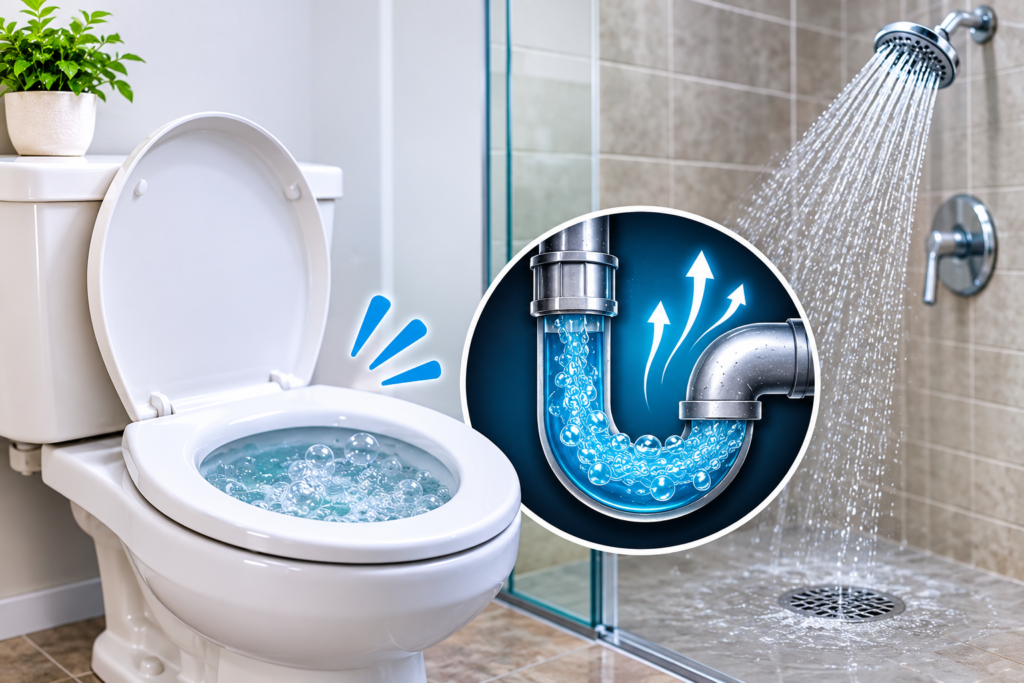
Your home’s drainage system is designed to move wastewater away from plumbing fixtures while allowing air to flow through dedicated vent piping.
When you run the shower or empty a sink, water travels through drainpipes and eventually enters the main building drain or sewer line.
As wastewater moves, air must also move through the system to maintain appropriate pressure.
If a drain becomes restricted or a vent cannot function properly, pressure changes may cause air to push through or pull against the water seal in a nearby fixture.
Because toilets contain a visible water seal in the bowl, these pressure changes may produce gurgling or bubbling sounds.
A gurgling toilet usually indicates a drainage or venting problem, but the sound alone cannot identify the exact cause.
One of the more concerning causes of toilet gurgling is a partial obstruction in the main sewer line.
Your home’s main sewer line carries wastewater from multiple plumbing fixtures toward the municipal sewer system or a private septic system.
When grease, debris, tree roots, or other materials restrict the pipe, wastewater and air may have difficulty moving normally.
A main sewer restriction may cause several symptoms throughout your home.
You might notice that your toilet bubbles when the shower runs, your bathtub drains unusually slowly, or wastewater appears in a lower fixture after another plumbing fixture is used.
Sometimes the problem starts with occasional gurgling before progressing to a more significant backup.
For homeowners experiencing toilet gurgling and slow drains in Battle Ground, WA, professional sewer line evaluation can help determine whether the obstruction is localized or affecting the main drainage system.
Plumbing vent pipes allow air to enter and move through the drainage system while directing sewer gases outdoors.
Many homes have vent piping that extends through the roof.
If a vent becomes blocked, normal pressure regulation may be disrupted.
Under certain conditions, draining water can cause nearby fixtures to gurgle as air moves through their water seals.
Potential obstructions include leaves, debris, nesting materials, and other objects.
Vent problems may also result from damaged piping or improper plumbing configurations.
However, it is important not to assume every gurgling toilet has a blocked roof vent.
Drain restrictions can create similar symptoms.
Because vent diagnosis may involve roof access and specialized plumbing equipment, homeowners should avoid climbing onto roofs or attempting to clear inaccessible vent piping themselves.
A qualified plumber can determine whether the problem involves the drainage system, ventilation, or another component.
Your toilet, shower, and bathroom sink may connect to a shared branch drain before wastewater reaches the main sewer line.
If that shared section develops a blockage, using one fixture can affect another.
For example, when shower water flows into a restricted branch drain, the resulting pressure changes may cause the nearby toilet to gurgle.
Bathroom plumbing can accumulate hair, soap residue, foreign objects, and other debris.
Some restrictions develop gradually, allowing water to drain normally at first.
As the blockage becomes more severe, additional symptoms may appear, including standing water, repeated slow drainage, and toilet bubbling.
If only one bathroom is affected, the problem may be located in a shared branch line rather than the home’s main sewer.
Professional drain diagnostics can help identify the appropriate access point and cleaning method.
Tree root intrusion is another possible cause of recurring drainage problems.
Roots can enter underground sewer lines through cracks, damaged joints, or other openings.
Once inside, roots may grow and collect debris, restricting the flow of wastewater.
A partially obstructed sewer line can create symptoms that appear throughout the home, including toilet gurgling when nearby fixtures drain.
Even if a plumber removes the roots, the opening that allowed them to enter may remain.
Without addressing the damaged section, roots can eventually return.
For homes in Battle Ground with mature landscaping or a history of sewer backups, a sewer camera inspection may help identify visible root intrusion or structural defects.
However, nearby trees alone do not prove that a sewer line contains roots.
Not every drainage problem is caused by material that can simply be removed.
Some pipes develop structural problems that interfere with proper wastewater flow.
These may include cracked sections, separated joints, significant corrosion, or improperly aligned connections.
If wastewater repeatedly collects in a damaged section of piping, debris can accumulate and create recurring restrictions.
Professional cleaning may restore drainage temporarily, but it cannot repair a collapsed or structurally damaged pipe.
For recurring toilet bubbling problems in Battle Ground, identifying the underlying condition can help homeowners avoid paying repeatedly for cleaning that does not resolve the cause.
A toilet can gurgle even when it flushes normally.
This happens because the restriction may be located farther downstream or in a connected vent.
For example, a partial sewer line obstruction may still allow wastewater to pass through the pipe while interfering with normal airflow.
Similarly, a venting problem may create pressure fluctuations even when the toilet itself is unobstructed.
This is why plunging the toilet doesn’t always resolve the problem.
If the sound repeatedly occurs when another fixture drains, the shared plumbing system should be evaluated.
Different symptoms can help determine how urgently the plumbing needs attention.
Symptom | Possible concern |
Toilet gurgles when the shower runs | Shared drain restriction or venting problem |
Toilet bubbles when the sink empties | Pressure changes in connected drain piping |
Toilet gurgles and several drains are slow | Possible main sewer obstruction |
Water rises in the toilet when another fixture drains | Significant downstream restriction |
Sewage backs up into a shower or bathtub | Potential sewer backup requiring prompt service |
Gurgling continues after repeated drain cleaning | Possible structural or recurring sewer problem |
These symptoms are not definitive diagnoses.
A plumber may need to inspect the system to identify the exact cause.
If your toilet begins making unusual sounds, there are several safe steps you can take before scheduling professional service.
Notice whether the sound occurs when the bathroom sink, shower, washing machine, or other fixtures drain.
This information can help a plumber identify which pipes may share the affected connection.
Check whether sinks and bathtubs have been draining more slowly than usual.
Avoid running large amounts of water simply to test the system if you suspect a sewer backup.
Chemical drain cleaners may contain corrosive ingredients that create burn hazards and complicate professional drain cleaning.
They also cannot repair damaged sewer lines or resolve every type of blockage.
If sewage begins entering a bathtub, shower, or floor drain, stop using the affected plumbing.
Avoid contact with contaminated water and arrange prompt professional assistance.
Professional treatment depends on what is causing the pressure changes.
A professional drain snake may remove certain localized obstructions involving debris, hair, or other materials.
This approach may be appropriate when a shared branch line contains a blockage.
Hydro jetting uses pressurized water to remove certain accumulations of grease, sludge, and debris.
For suitable pipes, it may provide more extensive cleaning than a simple mechanical clearing.
However, hydro jetting is not appropriate for every plumbing system, particularly when pipes are structurally compromised.
Learn more about professional hydro jetting services.
A camera inspection allows a plumber to evaluate visible conditions inside accessible sewer piping.
It may reveal root intrusion, displaced joints, damaged pipes, or recurring accumulation.
When symptoms suggest a venting problem, a plumber can inspect the appropriate portions of the drainage and vent system.
The goal is to identify the actual cause rather than replace or clean components unnecessarily.
Battle Ground includes established residential neighborhoods near its downtown area, newer housing developments, and properties throughout surrounding Clark County.
Plumbing systems can vary based on their age, construction, materials, and previous maintenance.
Some properties may have older underground sewer connections, while newer homes can also experience drain restrictions caused by grease, wipes, or other materials.
The City of Battle Ground operates a municipal wastewater collection system.
According to the city’s published guidance, private property owners are responsible for the installation, maintenance, and repair of their sewer laterals.
A sewer lateral is the pipe connecting an individual property to the public sewer main.
This distinction is important because a blockage in a privately maintained lateral may be the homeowner’s responsibility even when the property connects to municipal sewer infrastructure.
For homeowners experiencing sewer line backups in Battle Ground, Washington, identifying the location of the obstruction can help determine the next steps.
Properties outside the municipal sewer service area may use private septic systems, which require a different diagnostic approach.
Not every plumbing problem can be prevented, but proper household maintenance can reduce common causes of drainage restrictions.
Avoid pouring cooking grease into sinks. Grease can accumulate inside pipes and trap debris.
Only flush human waste and toilet paper. Wipes, paper towels, and hygiene products can contribute to sewer blockages.
Use hair catchers in bathtubs and showers to reduce the amount of material entering shared drains.
Pay attention to recurring slow drainage rather than waiting for wastewater to back up into the house.
If your property has previously experienced root intrusion or sewer damage, ask a plumber whether further inspection or targeted maintenance is appropriate.
Regular professional cleaning is not necessary for every household. Recommendations should reflect the condition and history of the plumbing system.
A toilet that gurgles when you use the shower or sink may be an early sign of a drainage or venting problem.
While the sound itself doesn’t establish that your sewer line is damaged, repeated bubbling, slow drains, and wastewater backups should be investigated.
At Service Pro Plumbing, we provide professional drain cleaning, sewer inspections, and plumbing repairs throughout Battle Ground and surrounding Clark County communities.
Whether you’re dealing with a bubbling toilet, recurring drain clogs, or suspected sewer line damage, our team can help identify the problem and recommend an appropriate solution.
Contact Service Pro Plumbing to schedule professional drain or sewer service in Battle Ground, WA.
A toilet may gurgle when shower water moves through a partially blocked shared drain or when a plumbing vent is not functioning properly.
The sound results from pressure changes affecting air and water movement in the drainage system.
Your sink and toilet may share part of the same drainage system.
If a connected pipe is restricted or improperly vented, draining the sink can cause pressure changes that produce bubbling in the toilet.
It can be, especially if several fixtures are draining slowly or wastewater begins backing up.
However, a localized branch drain blockage or vent problem can create similar symptoms.
Professional diagnosis can identify the cause.
Yes. A blocked or improperly functioning vent can interfere with pressure regulation and contribute to gurgling noises.
However, vent problems should not be assumed without evaluating the drainage system.
Plunging may help if a localized obstruction is responsible.
However, it generally won’t resolve a blocked roof vent, damaged sewer pipe, or obstruction located farther downstream.
Contact a plumber if the gurgling repeatedly occurs, several fixtures drain slowly, or the problem returns after basic maintenance.
If sewage enters the home or wastewater is overflowing, stop using the affected plumbing and arrange urgent service.
The cost depends on the cause, location, accessibility, and required repairs.
A localized drain blockage may be simpler to address than an underground sewer obstruction involving damaged piping.
A professional inspection can help determine the appropriate scope of work.